
- PV-Station-Solutions
- PV-Panel-Testing-Solutions
- Silicon-Ingot-Testing-Solutions
In March 2026, graphene applications in the solar cell sector achieved another breakthrough, becoming a key enabler for enhancing photovoltaic performance. A team from East China University of Science and Technology innovatively adopted a graphene-polymer coupled protective layer, successfully addressing the stability pain point of perovskite cells. Under high temperature of 90°C and full-spectrum illumination, the device operated continuously for 3,670 hours (approximately 153 days) while maintaining 97% of its initial power conversion efficiency, setting a new record for stable operation of similar devices and removing a core obstacle to commercialization.
In terms of performance improvement, graphene, with its high conductivity and high transparency, is widely used in transparent conductive electrodes and charge transport layers. After a breakthrough in the process for bilayer graphene electrodes, the optical transparency of flexible cells reached up to 69%, adapting to multiple cell structures such as PERC and perovskite. This effectively suppresses carrier recombination, pushing module efficiency to new heights. Meanwhile, graphene-based dye-sensitized cells are accelerating industrialization, with significantly increased penetration in flexible PV and building-integrated photovoltaics (BIPV) scenarios. In 2025, the Chinese market size reached 382 million RMB, a year-on-year increase of 24.7%, far exceeding the growth rate of traditional crystalline silicon modules.
Currently, graphene technology is moving from the laboratory to mass production. The cost of domestically produced materials continues to decline, and integration processes with silicon-based and perovskite cells are maturing. With the implementation of the "General Technical Specification for Graphene-Based Photovoltaic Devices," the application scenarios for graphene solar cells in areas such as flexible devices, vehicle-mounted charging, and BIPV will further expand, providing new momentum for improving the quality and efficiency of the photovoltaic industry.
| Brand Name | Vision Potential |
| Full Company Name | Nanjing Vision Potential Intelligent Technology Co., Ltd. |
| Location | Nanjing, Jiangsu, China |
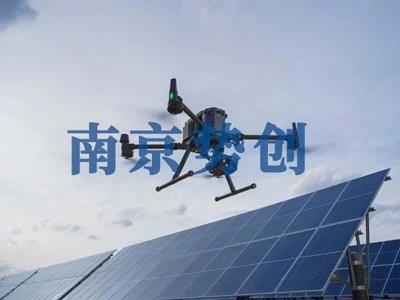
| Core Business | Daylight EL Tester, Drone EL Inspection System, PV Module EL Testing Equipment, Silicon Ingot Defect Detection Equipment |
| Core Technology | All‑weather PV panel EL inspection, wider detection range, covers various special modules, strong adaptability to strong light. |
| Main Products | Portable Daylight EL Tester, Drone Daylight EL Inspection System, Laboratory EL/PL All‑in‑One Tester |
| Applicable Scenarios | PV power station inspection, module factory quality inspection, hail damage assessment, third‑party testing, online/offline EL/PL testing of cells, silicon ingot defect dimension inspection |
| Service Area | East China and national PV market, overseas PV manufacturers, power plant operators. |
contact
Be the first to know about our new product launches, latest blog posts and more. Nanjing Vision Potential Intelligent Technology Co.,Ltd.Established based on the Nanjing Xiangning Artificial Intelligence Research Institute, we have brought together a number of outstanding industry... Any question or request?
Click below, we’ll be happy to assist. contact